
What is the Difference Between a Tux and a Suit
In the world of men’s formalwear, few questions spark as much debate as understanding the nuances between a tuxedo and a suit. Whether you’re preparing for a wedding, a gala, or a business event, knowing tux and a suit can make all the difference in how you present yourself. These garments aren’t just clothing they’re statements of style, occasion, and sophistication. A tuxedo evokes images of black-tie elegance, while a suit offers everyday versatility. But why does this distinction matter? In an era where dress codes are blurring, getting it right ensures you stand out for the right reasons, avoiding the faux pas of being under- or overdressed. This article dives deep into the history, key differences, appropriate occasions, and modern trends, helping you navigate formal attire with confidence.
The History of Tuxedos and Suits
To truly appreciate the difference between a tux and a suit, it’s essential to trace their origins. Both have evolved from 19th-century European fashion, but their paths diverged based on social needs and cultural shifts.
The suit, as we know it, emerged in the early 1800s as the “lounge suit,” a more relaxed alternative to the formal tailcoats worn by gentlemen. Credited to tailors like those at Brooks Brothers in the United States, the suit became popular for its practicality. It featured matching trousers and a shorter jacket, often made from heavy wool, and was designed for daytime business wear. By the mid-19th century, suits had transitioned into versatile wardrobe staples, adaptable for work, social gatherings, and even semi-formal events. This evolution reflected broader societal changes, including the rise of the middle class and the need for clothing that balanced comfort with professionalism.
The tuxedo, on the other hand, has a more scandalous and elite backstory. Introduced in the 1860s by the Prince of Wales (later King Edward VII), it started as a tailless smoking jacket for informal evenings at home. This “dinner jacket” was a rebellious departure from the stiff tailcoat, offering comfort without sacrificing elegance. The name “tuxedo” itself is American, derived from Tuxedo Park, a New York enclave where socialite Griswold Lorillard popularized it in 1886 by wearing a tailless black jacket to a formal ball. Initially shocking, it quickly became synonymous with evening formalwear. Edward VII’s influence spread the style across the Atlantic, where it symbolized sophistication for black-tie affairs.
Over time, these garments influenced each other. Suits adopted elements like varied lapels for customization, while tuxedos incorporated modern fabrics for broader appeal. Today, their histories underscore a key point: suits prioritize adaptability, while tuxedos emphasize exclusivity and formality.
Key Physical Differences Between a Tux and a Suit
At first glance, a tuxedo and a suit might seem interchangeable both include a jacket, trousers, and often a shirt and tie. However, the devil is in the details. The primary distinction lies in materials, design elements, and accessories, which dictate their formality levels.
One of the most noticeable differences is the presence of satin. Tuxedos feature satin accents on the lapels, buttons, pocket trims, and sometimes a stripe down the trouser leg, adding a subtle sheen that elevates the look for evening events. Suits, conversely, lack this satin, opting for matte fabrics like wool, cotton, or blends for a more subdued appearance.
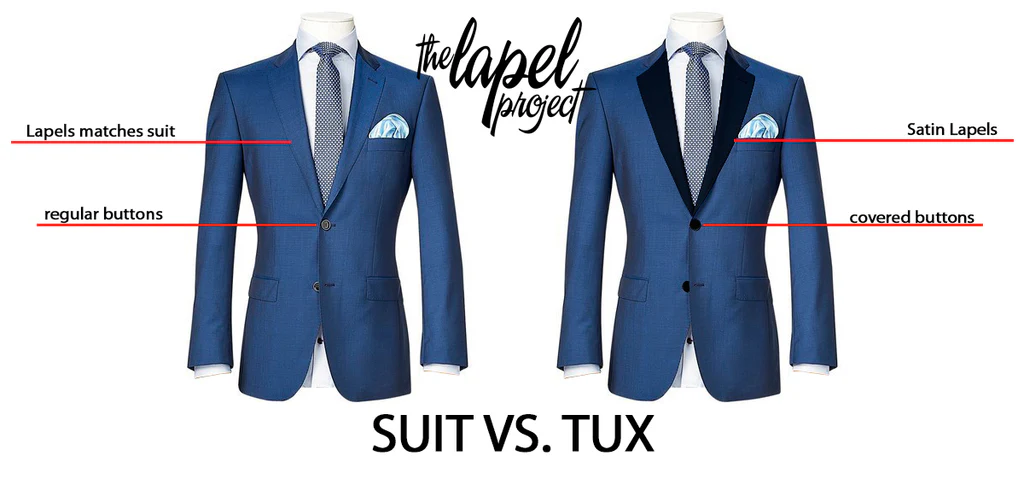
Lapel styles further set them apart. Tuxedos typically boast peak or shawl lapels, which are wider and more dramatic, enhancing the formal silhouette. Suits usually have notch lapels, which are narrower and V-shaped, lending a casual, business-like vibe. Tuxedo jackets are often single-breasted with one or two buttons, while suits can be single- or double-breasted with varied button counts.
Fabric choices also play a role. Tuxedos are commonly crafted from fine wool or wool blends in black or midnight blue for a luxurious feel. Suits offer more variety, including linen for summer or tweed for cooler weather, allowing for patterns like pinstripes or checks.
Accessories complete the distinction. A tuxedo pairs with a white dress shirt (often pleated with a wing collar), a black bow tie, cummerbund or waistcoat, and patent leather shoes. Suits allow for colored shirts, long neckties, belts, and a range of shoe styles, from oxfords to loafers.
To visualize these contrasts, here’s a comparison table:
| Aspect | Tuxedo | Suit |
|---|---|---|
| Satin Accents | Yes (lapels, buttons, pockets, trouser stripe) | No |
| Lapel Style | Peak or shawl | Notch (most common) |
| Jacket Buttons | 1-2, single-breasted | 1-3, single- or double-breasted |
| Typical Fabric | Wool, black/midnight blue | Wool, cotton, linen; varied colors/patterns |
| Shirt | White, pleated, wing collar | Any color, standard collar |
| Tie | Bow tie (black) | Necktie (various) |
| Waist Covering | Cummerbund or waistcoat | Belt |
| Shoes | Patent leather | Leather oxfords or loafers |
| Formality | High (black-tie events) | Versatile (business to semi-formal) |
When to Wear a Tux vs. a Suit
Choosing between a tux and a suit often boils down to the event’s dress code and time of day. Misjudging this can lead to awkward moments, so let’s break it down.
Tuxedos are reserved for formal evening occasions, such as black-tie weddings, galas, opera openings, or award ceremonies. Traditionally worn after 6 p.m., they signal high sophistication and are ideal when the invitation specifies “black tie”. For daytime events, even formal ones, a tux might appear overdressed opt for a suit instead.
Suits shine in versatile settings. They’re perfect for business meetings, job interviews, cocktail parties, or semi-formal weddings. A dark suit can approach tuxedo-level formality for evening events without the satin shine, while lighter suits work for daytime or casual affairs. For example, a navy suit with a tie is standard for office environments, offering a professional yet approachable look.
Cultural contexts matter too. In Western traditions, tuxedos dominate proms and red-carpet events, but suits are everyday staples. Always check the invitation—phrases like “formal attire” might allow either, but “black tie optional” leans toward tuxedos for those wanting to impress.
Modern Trends in Tuxedos and Suits
Fashion never stands still, and tuxedos and suits have adapted to contemporary tastes. Today’s trends blend tradition with innovation, making formalwear more accessible and personalized.
In tuxedos, velvet has surged in popularity for its luxurious texture, especially in jewel tones like burgundy or emerald for non-traditional events. Slim-fit silhouettes with narrower lapels offer a modern edge, while monochrome looks—think all-white tuxedos—challenge the classic black. Accessories are evolving too: patterned bow ties or skipping the cummerbund for a bare waist create an effortless vibe.
Suits are seeing a rise in sustainable fabrics like organic wool or recycled blends, reflecting eco-conscious consumers. Bold patterns, such as windowpane checks or subtle plaids, add personality to business attire. Double-breasted suits are making a comeback for their structured appeal, and colors like charcoal or forest green provide alternatives to navy and black.
Hybrid styles are blurring lines, like suits with satin lapels for “black-tie optional” events. Influencers on platforms like Instagram showcase these trends, encouraging experimentation while honoring roots.
How to Choose and Style Your Formalwear
Selecting between a tux and a suit involves fit, budget, and personal style. Start with measurements a well-tailored garment flatters any body type. Custom options from tailors ensure precision, while rentals suit one-off events.
Budget-wise, suits are more affordable (starting at $200-$500 for off-the-rack) and reusable, whereas tuxedos range from $500-$1,500 due to premium materials. Invest in quality for longevity.
Styling tips: For tuxedos, keep it classic black bow tie, polished shoes. For suits, layer with pocket squares or cufflinks for flair. Always consider the season; breathable fabrics for summer, heavier ones for winter.
Maintenance is key: Dry clean sparingly, store on wooden hangers, and steam wrinkles away.
FAQ: Common Questions About Tuxedos and Suits
Can I wear a suit to a black-tie event?
While not ideal, a dark suit with a bow tie can work if the event is “black-tie optional.” However, a true tuxedo is preferred for full formality.
Is a tuxedo always black?
Traditionally yes, but modern trends include midnight blue, white, or even patterned options for creative events.
What’s the main accessory difference?
Tuxedos use bow ties and cummerbunds; suits opt for neckties and belts.
How did the tuxedo get its name?
It originated from Tuxedo Park, New York, where it was first popularized in the 1880s.
Are tuxedos more expensive than suits?
Generally yes, due to satin details and formal fabrics, but prices vary by brand and customization.
Can women wear tuxedos or suits?
Absolutely tuxedo-inspired outfits have been a symbol of empowerment since the 1920s, with modern adaptations for all genders.
What’s the best fabric for a suit?
Wool is versatile and durable, but linen suits for warm climates or cotton for casual looks.
Conclusion
Understanding what is the difference between a tux and a suit boils down to formality, design, and occasion. Tuxedos, with their satin elegance and historical prestige, are for high-end evenings, while suits offer everyday adaptability and modern flair. From their 19th-century roots to today’s velvet trends and sustainable options, both remain timeless. Whether building your wardrobe or dressing for an event, prioritize fit and confidence. Ready to elevate your style? Consult a local tailor or explore online retailers like Hockerty for personalized adviceyour perfect look awaits.

Related Posts

What Is Gel-X Nails? A Complete Guide for Beginners

What is a Pedicure?
